-1.svg)
Why India Doesn’t Have a Beneteau Yet
August 7, 2026
France has Beneteau. Germany has Bavaria. Italy has Ferretti. India — with 7,500 kilometres of coastline — has no equivalent. MKEL exists to change that.
ARTICLE
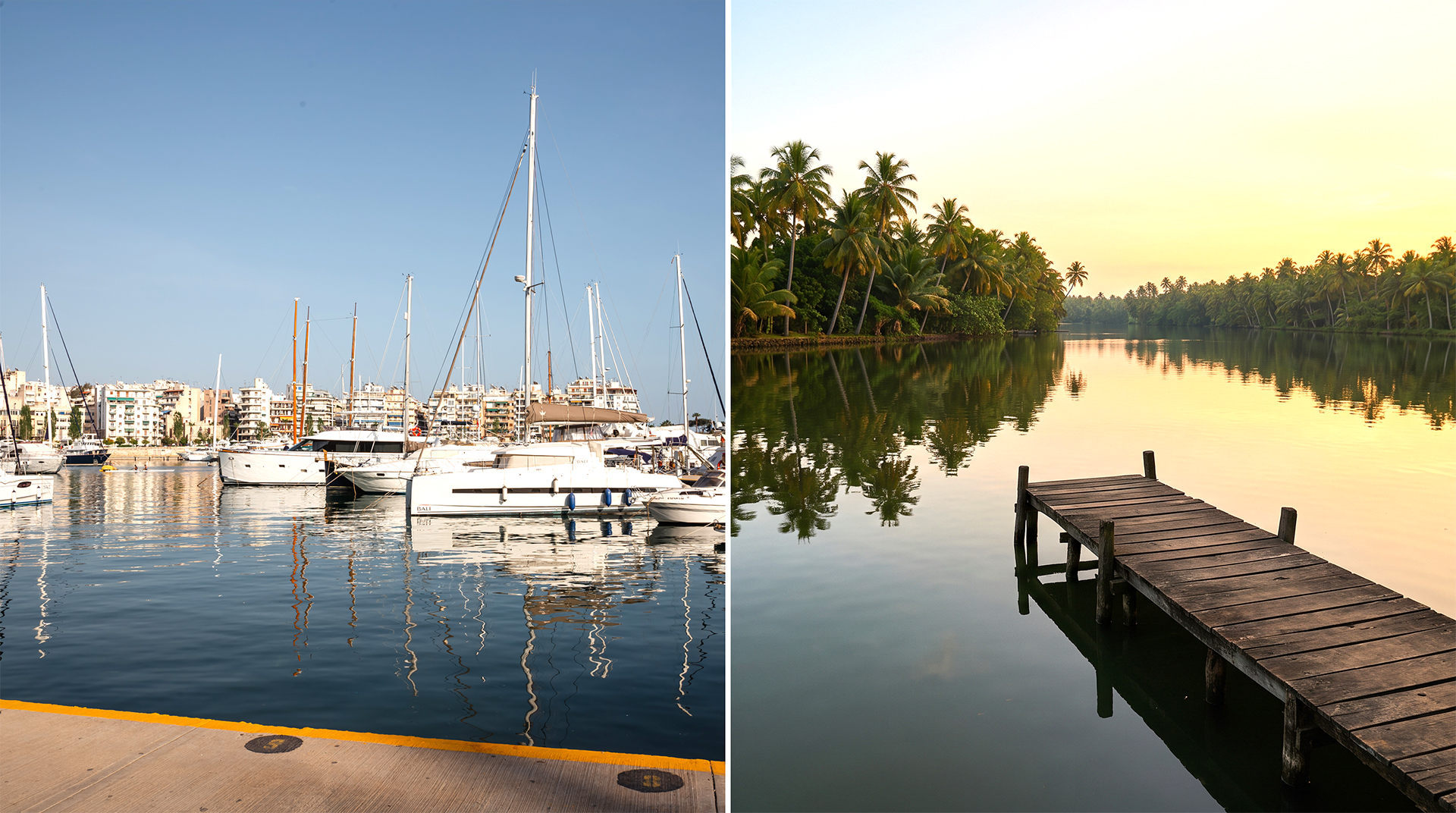
Walk along any marina in France, and you’ll see them: rows of Beneteau and Dufour sailing yachts, built a few hundred kilometres away, owned with pride, exported to every corner of the world. Do the same in Germany and you’ll find Bavaria. In Italy, Ferretti and Azimut. These are not just boat companies. They are national statements — proof that their countries can design and build beautiful, desirable things for the water, and that the world will pay for them.
Now consider India. Seven and a half thousand kilometres of coastline. A shipbuilding heritage that predates most modern nations — the dhows of Gujarat, the urus of Beypore, vessels that carried trade across the Indian Ocean for centuries. A country that today builds satellites, submarines, and half the world’s software.
And not one globally recognised marine lifestyle brand. Not one.
The premium end of India’s marine leisure market is entirely imported. The domestic end is largely basic — rotomoulded plastic, imported hulls rebadged, products built to a price rather than a standard. The idea of an Indian-designed, Indian-built craft that someone in Marseille or Dubai might aspire to own barely exists as a concept.
Why the gap exists
It isn’t a lack of capability. India manufactures to aerospace tolerances and builds warships to naval standards. The gap is cultural and commercial. Marine leisure was never mainstream here — boats meant fishing or ferrying, not freedom. The infrastructure of marinas, clubs, and waterfront access never developed. And so the brands never came, because nobody built for a market that didn’t yet see itself on the water.
The result is a strange asymmetry: one of the most water-rich countries on Earth, with one of the least developed marine lifestyle cultures — and no brand willing to lead it.
The standard we hold ourselves to
MKEL was founded to be that brand. Not “good for an Indian product.” Simply good — measured against Beneteau, against Bavaria, against the best composite builders anywhere.
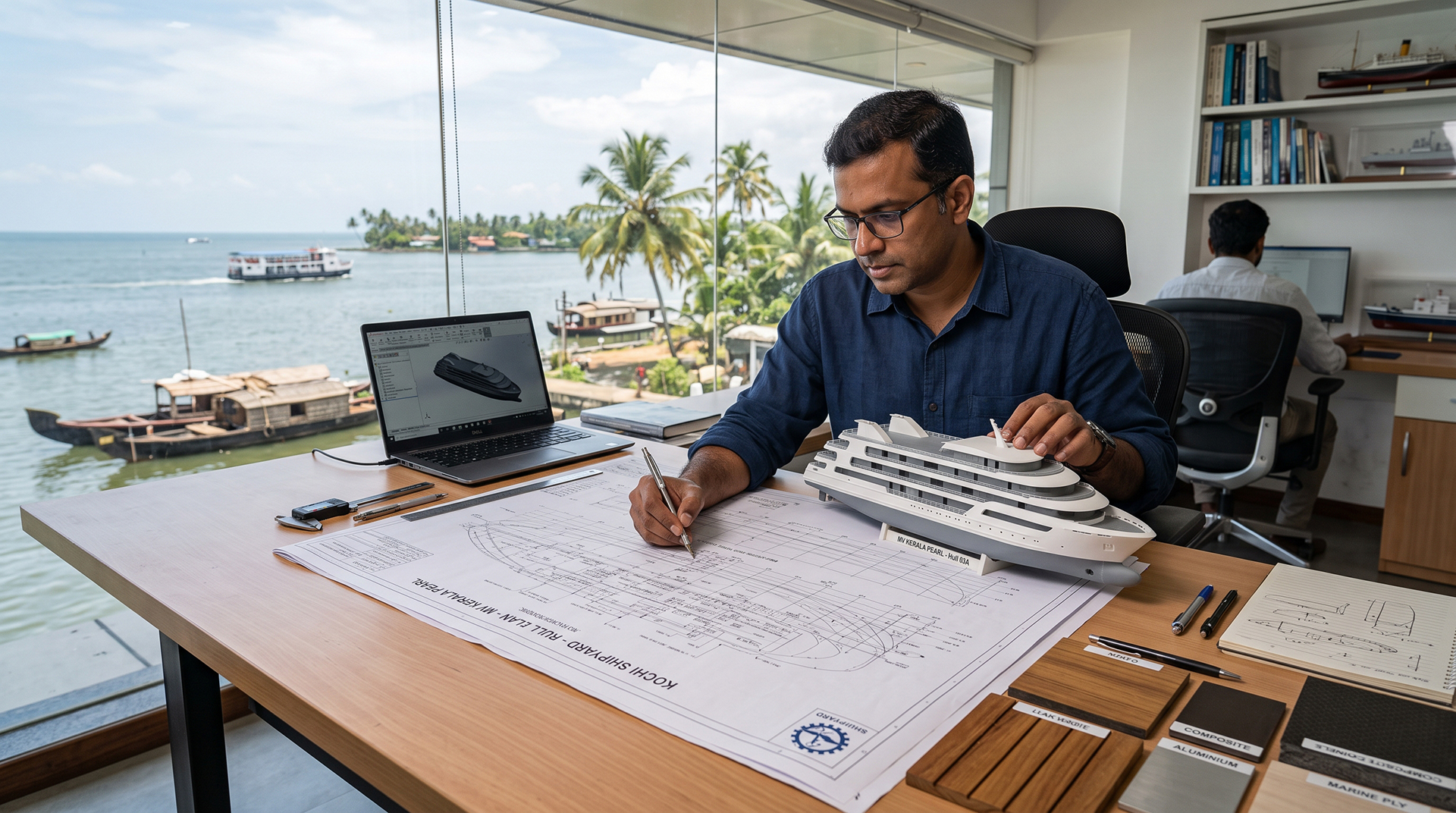
That standard shapes everything we do. Our hulls are developed by naval architects, not stylists. Our laminates are engineered — fibre orientation, layup sequence, panel thickness calculated for the loads each hull will see. Our primary manufacturing process is vacuum infusion, the same closed-mould technique used in high-performance marine and aerospace structures, producing hulls that are lighter, stiffer, and more consistent than anything hand layup can achieve. Every craft leaves our Kochi workshop with a documented build record, from raw fibre to finished hull.
Beneteau wasn’t born a giant. It was born in 1884 as a small boatyard in a French fishing village, held to an uncompromising standard for generations.
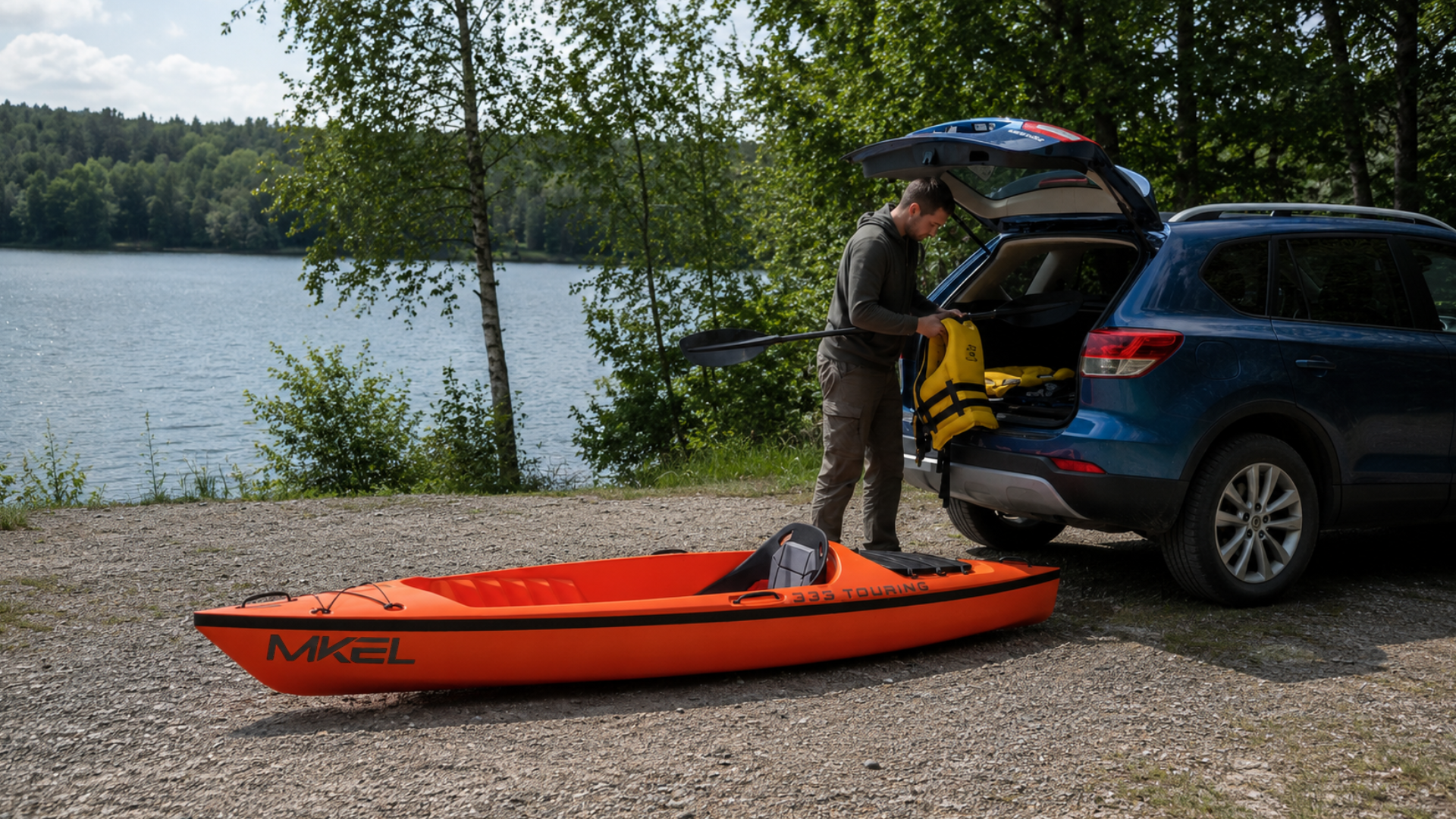
That’s the long game we’re playing. Our kayak range is on the water now. Behind it, on our design boards: a 27-foot fishing tender, a 36-foot work boat, and a blue-water sailing catamaran. Each one designed and built in Kerala. Each one held to the only standard that matters — the world’s.
India doesn’t have a Beneteau yet. We intend to fix that.
.jpeg)