-1.svg)
Buying Your First Kayak in India: An Honest Guide
August 12, 2026
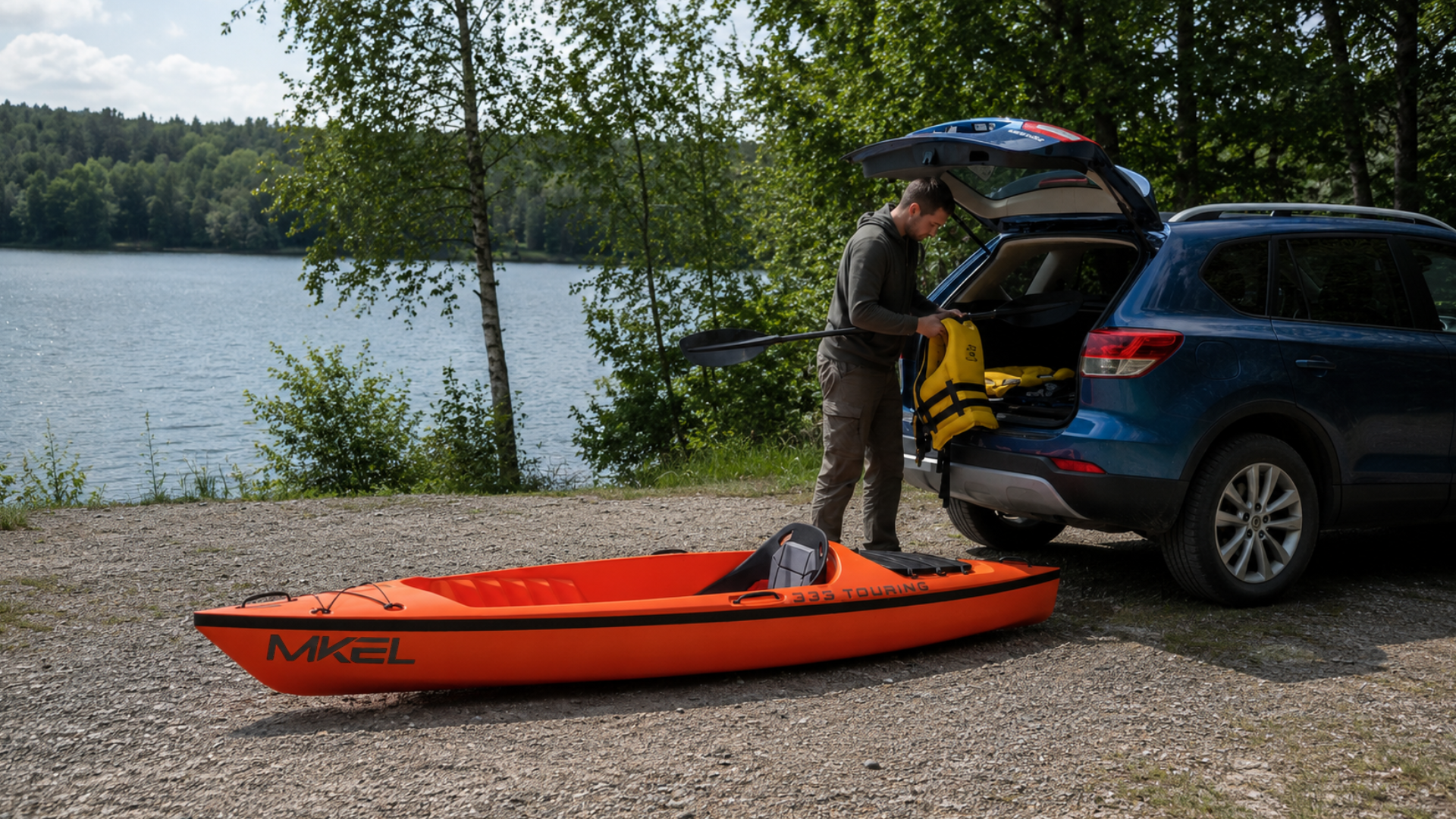
What to look for, what to avoid, and when a cheap kayak is genuinely fine — a no-nonsense guide from people who build them.
ARTICLE
We build kayaks, so you’d expect this guide to end with “buy ours.” It won’t — at least, not for everyone. A kayak is a wonderful purchase and a terrible impulse buy, and the Indian market makes research harder than it should be: few showrooms, fewer test paddles, and a lot of listings that tell you the colour but not the hull material. So here is the guide we wish existed when we started — honest enough that we’ll tell you when a cheap boat is genuinely the right call.
Start with your water, not the boat
The single biggest mistake first-time buyers make is choosing a kayak before choosing a use. Be honest about where you’ll actually paddle most. Calm backwaters, lakes, and slow rivers reward stability and comfort — you want a wider, shorter hull that forgives wobbles. Longer coastal runs and open water reward length — a longer waterline tracks straighter and glides further per stroke, at the cost of some agility and initial stability. If your honest answer is “an hour on the lake on Sunday mornings,” buy for that, not for the expedition you imagine taking someday.
The material question — and when plastic is fine
Most kayaks sold in India are rotomoulded polyethylene: plastic melted into a mould. Rotomoulded boats are heavy and flexible, but they are also cheap, tough, and almost impossible to destroy — you can drag them over rocks and drop them off a roof rack and they shrug it off. If you’re buying a knockabout boat for occasional use, for kids, or for a homestay or resort, an honest rotomoulded kayak is genuinely fine. Buy one without guilt.
Composite kayaks — fibreglass or carbon fibre in a resin matrix — are a different species. They are dramatically lighter (which you feel every single time you carry the boat), far stiffer (which you feel in every stroke, as energy goes into motion instead of hull flex), and they last decades with basic care. They cost more, and they deserve slightly more respect around sharp rocks. If you’ll paddle regularly, cover distance, or simply care how a thing is made, composite is worth every rupee. This is where we’ll declare our bias: it’s the only way we build.
Weight is the spec everyone ignores — until they own the boat
Here’s the truth nobody tells you: the hardest part of kayaking in India is not the paddling. It’s getting the boat to the water. Most of us don’t live on a waterfront; the kayak lives at home, travels on a roof rack, and gets carried the last hundred metres. A 30-kilogram rotomoulded boat makes that a two-person job and quietly kills the hobby. A composite hull in the teens of kilograms means you go paddling on a whim, alone, without negotiating for help. Check the weight before anything else on the spec sheet.
Stability: primary vs. secondary
Beginners fixate on “will it tip?” — fair enough. Know that there are two kinds of stability: primary (how steady the boat feels sitting flat) and secondary (how firmly it resists actually capsizing when leaned). Wide recreational hulls have huge primary stability and feel reassuring instantly. Touring hulls feel slightly livelier at rest but hold a firm edge when leaned — which is what actually keeps you dry in chop. For your first boat on calm water, prioritise primary stability. Just know that as your skills grow, your definition of “stable” will change.
Budget honestly
As a rough map of the Indian market: entry rotomoulded boats occupy the lowest tier and do their job; imported branded rotomoulded and entry composite boats sit in the middle; and engineered composite craft occupy the premium tier. The mistake is not buying cheap — it’s paying mid-tier money for a boat with bottom-tier construction because the listing used the word “professional.” Ask one question of any seller: what is the hull made of, exactly, and how? If they can’t answer precisely, walk away.
The checklist
Before you pay for anything: know your primary water and buy for it; check the hull material and construction method by name; check the weight against your real carrying situation; sit in it if you possibly can (cockpit comfort is personal and non-negotiable); ask about UV resistance and repairability; and confirm what’s included — paddle, seat, hatches — because “extras” add up.
The best kayak is not the best kayak on paper. It’s the one that actually gets you on the water, often.
And if your research leads you toward a serious composite craft built for Indian waters — well, you know where to find us. But even if it doesn’t: get on the water. That’s the whole point.
.jpeg)