-1.svg)
Why We Started with a Kayak (Not a Yacht)
August 14, 2026
-1.jpeg)
The question every ambitious boat company gets asked — and the strategic answer hiding inside a 16-foot hull.
ARTICLE
When people hear our roadmap — fishing tenders, work boats, a blue-water sailing catamaran — and then see that our first products are kayaks, some of them smile politely. A kayak? That’s the grand ambition?
It’s a fair reaction, and it deserves an honest answer. We started with a kayak precisely because our ambitions are large. Here’s the logic.
The proving ground
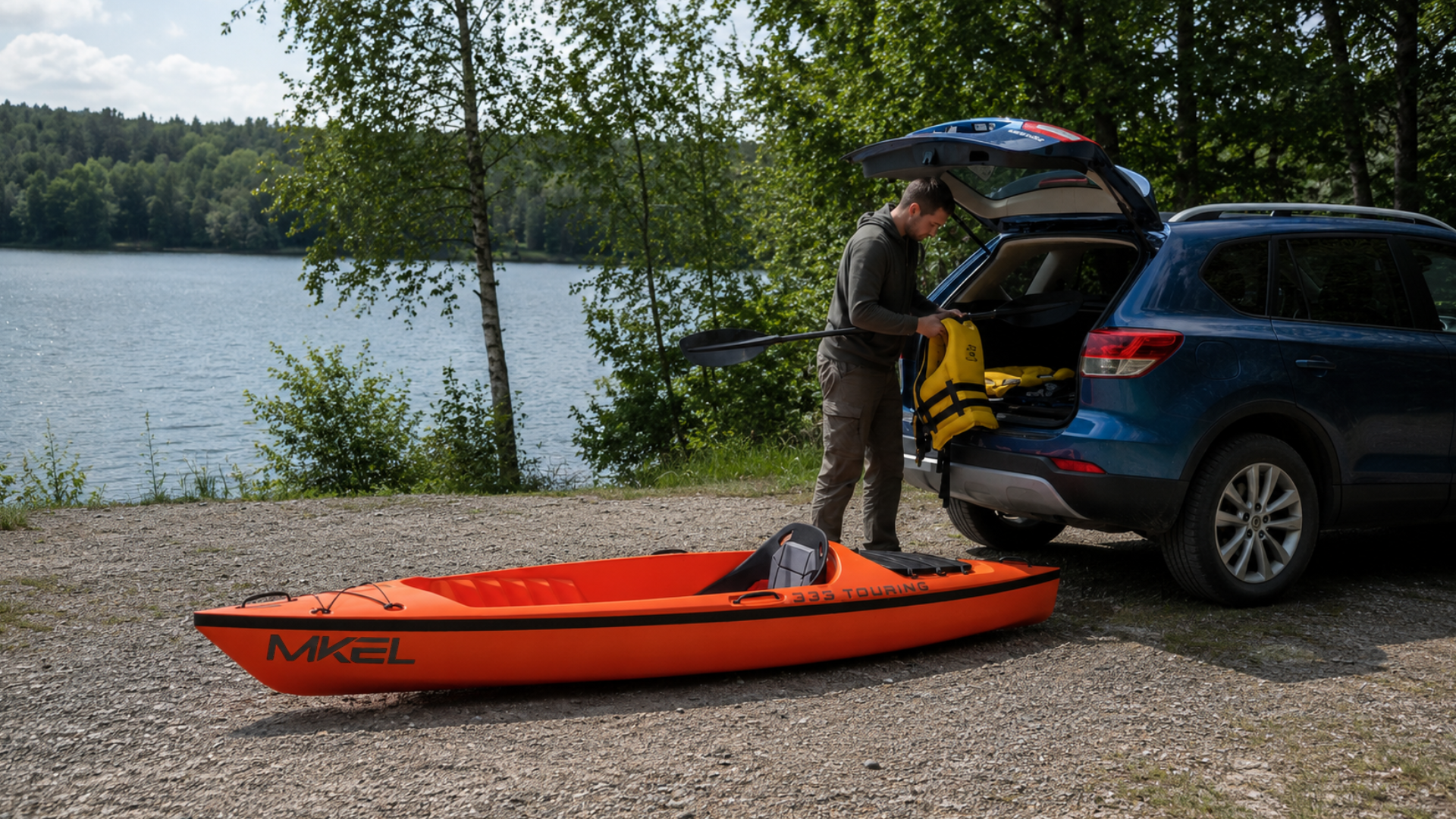
A boat company is only as good as its production line, and a production line is only proven by production. The kayak is the perfect crucible: it demands everything a larger vessel demands — naval architecture, precision moulds, engineered laminates, vacuum infusion, quality documentation, fit and finish — but at a scale where we can iterate fast, produce in volume, and perfect every step of the process. Every mould we build, every infusion we run, every hull we finish teaches the team something that transfers directly to the 27-footer behind it.
Tesla understood this sequence: the Roadster proved the technology and funded the learning before the mass-market cars arrived. Honda entered America with small motorcycles before anyone would trust it with a car. Starting small is not a lack of ambition. It is how serious ambition de-risks itself.
The honesty test
There’s a second reason, and it’s about credibility. A kayak has nowhere to hide. No engine masks a heavy hull; no electronics distract from a poor laminate. If our composite work is anything less than excellent, the customer feels it — in the weight when they lift it, in the flex when they paddle it, in the finish when they run a hand along it. By launching with the most honest product in boating, we submit our workmanship to public judgement from day one. If we can win trust here, we’ve earned the right to ask for it on bigger hulls.
The market ladder
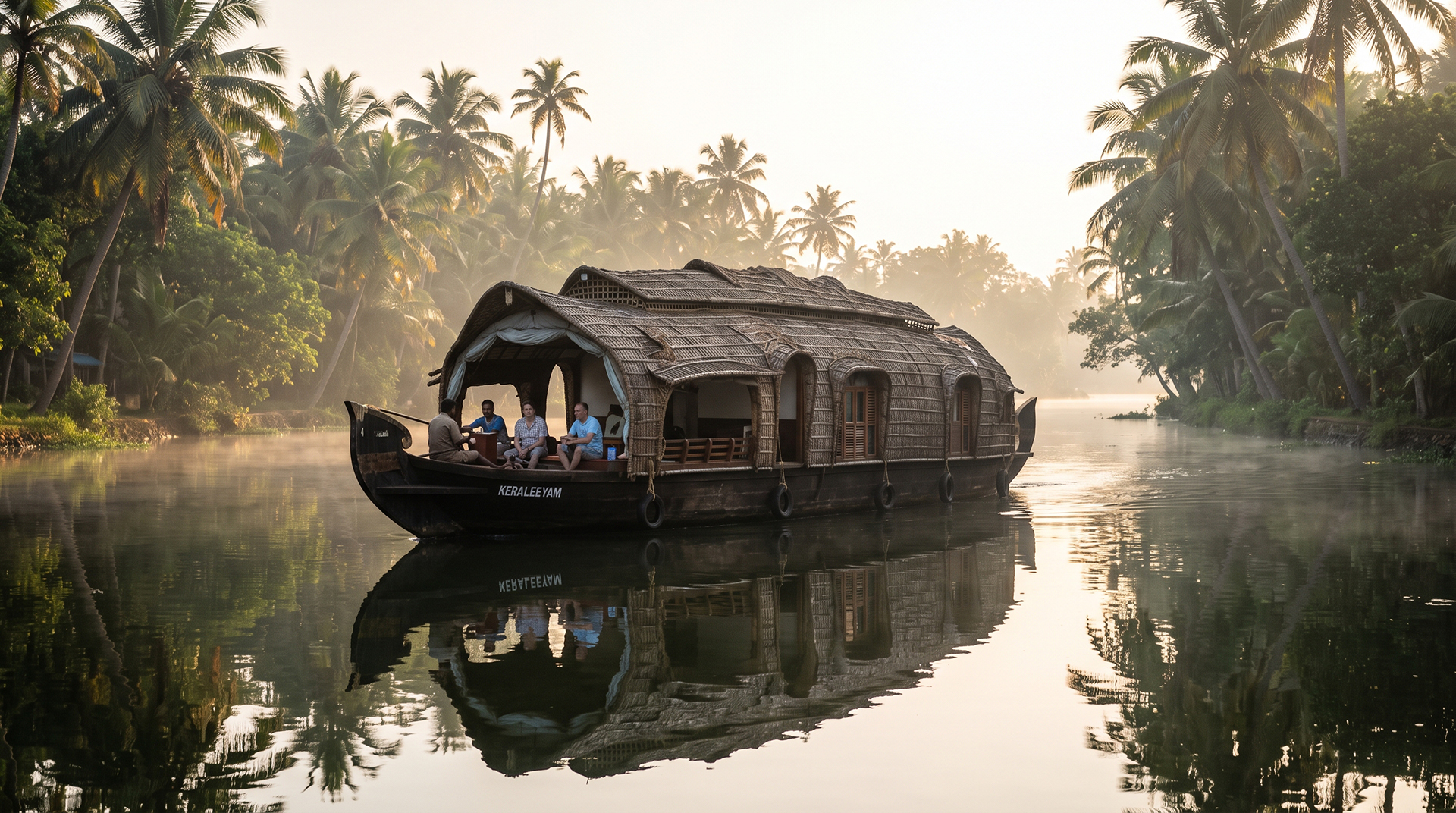
There’s also a commercial truth: India’s marine leisure market is early, and a kayak is its most accessible entry point — no berth, no licence, no crew, no marina. It lets thousands of people form a relationship with the water, and with our brand, years before they’re ready for a tender or a catamaran. The paddler on the backwaters today is the boat owner of 2032. We’d like to be the brand they grew up with on the water.
The roadmap, restated
So the sequence is deliberate: the NavIQ kayaks prove the production and build the brand; the 27-foot fishing tender and 36-foot work boat scale the composite work into powered, commercial craft; and the sailing catamaran — the vessel that will carry Designed and built in India into waters where that phrase has never sailed — arrives when we have earned it.
We didn’t start with a kayak instead of a yacht. We started with a kayak on the way to one.
Watch this space. Better yet — come paddle with us while you wait.