-1.svg)
The NavIQ Story: Designing Our First Range
August 10, 2026
Three lengths, one philosophy. How our naval architects turned a blank sheet into the NavIQ range — and why the decisions that don’t show are the ones that matter most.
ARTICLE
Every product range begins with a blank sheet and a set of arguments. The NavIQ range began with one argument in particular, held over several weeks between our naval architects: what should an Indian kayak actually be designed for?
It sounds like a trivial question. It isn’t. A kayak designed for Norwegian fjords makes different choices than one designed for a Baltic lake. And a kayak designed for India — for backwaters with their gentle chop and long distances, for rivers, for coastal paddling in warm water, for owners who will often carry the boat themselves and store it at home — has its own set of right answers. Nobody had seriously worked them out before, because nobody had designed a range for these waters from first principles. So we did.
The name
NavIQ joins two ideas we refuse to separate: navigation — the oldest of the water arts — and intelligence, the engineering that now goes into every curve of a modern hull. A NavIQ is a thinking craft: every line on it exists because a calculation put it there.
Three lengths, three missions
The range spans three hulls, and the differences between them are not just length — they are different answers to the stability–speed–capacity triangle that governs all kayak design.
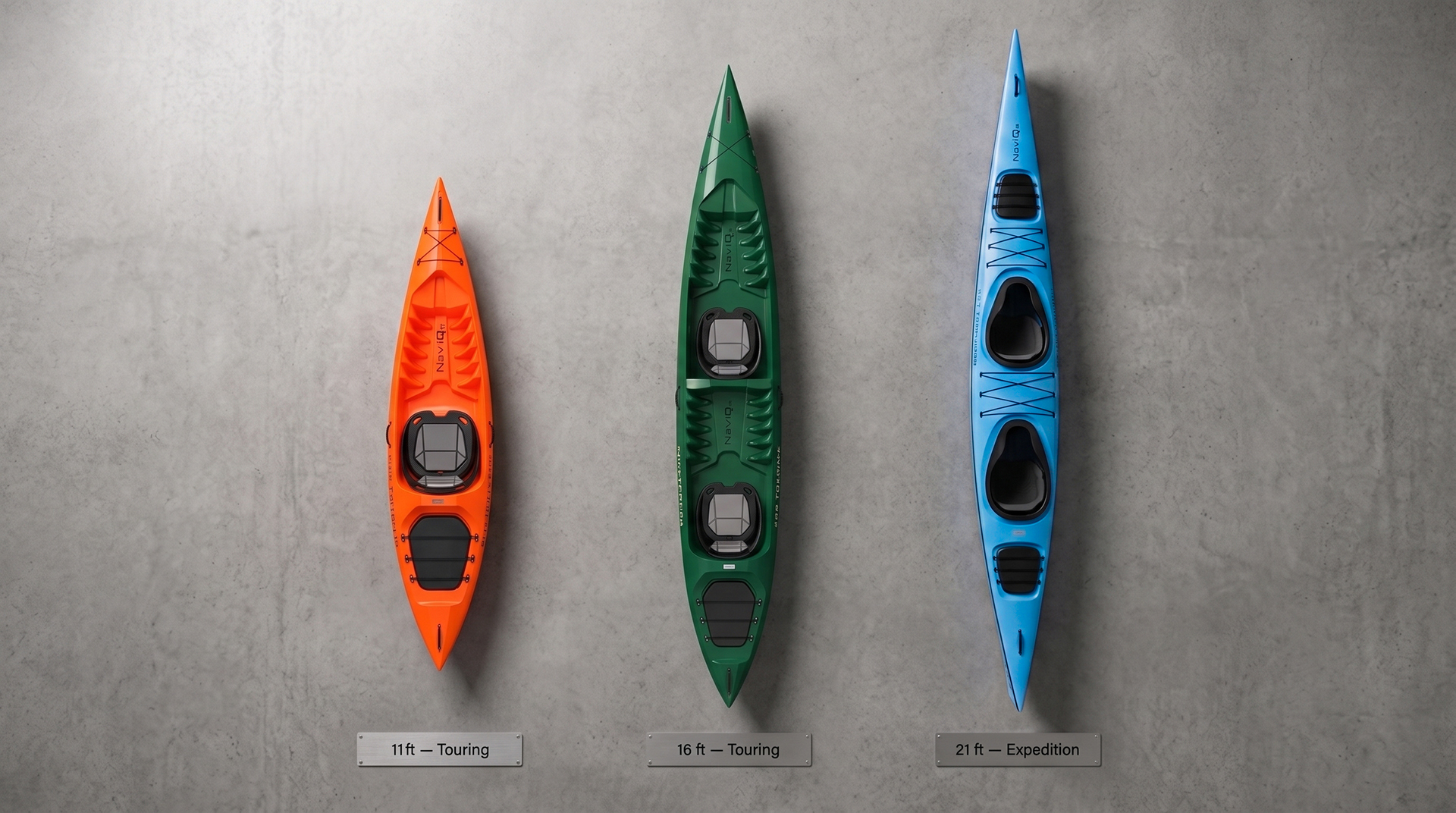
The 11-footer is the gateway: beam and hull sections tuned for confidence-inspiring initial stability, a manageable weight for solo carrying, and forgiving handling for first-time paddlers and families. It gives away some top-end speed, deliberately — its mission is to make the water feel welcoming.
The 16-footer is the heart of the range: the touring machine. A longer waterline for glide and tracking, refined rocker for manoeuvrability in backwater channels, and storage for day-trip and overnight gear. This is the hull our architects fought over the longest, because it has to do everything well.
The 21-footer is the statement: an expedition-class hull with the waterline length for genuine speed over distance, designed for experienced paddlers, long coastal runs, and tandem configurations. It is the least forgiving and the most rewarding — exactly as an expedition craft should be.
The decisions that don’t show
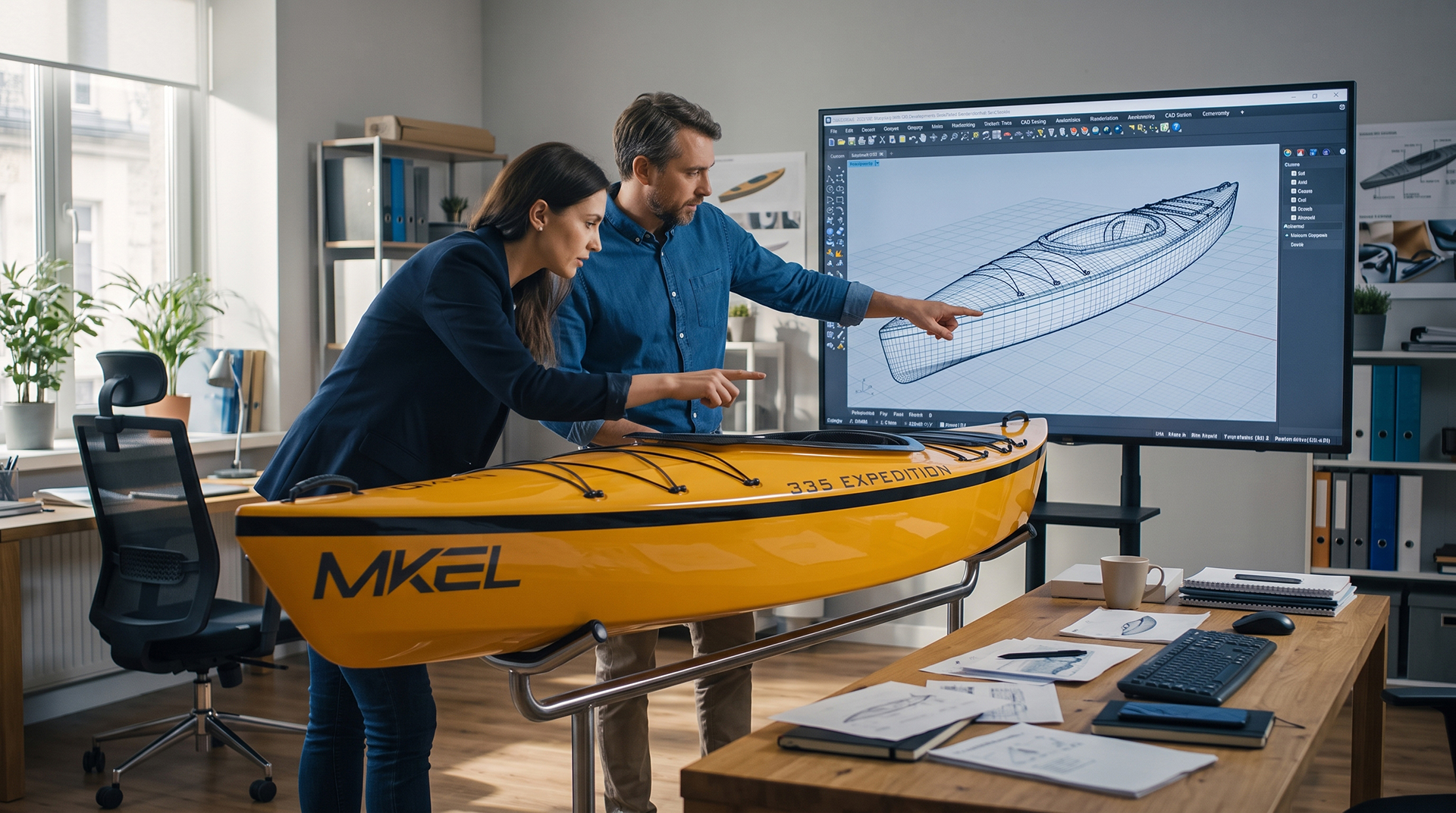
The visible design is the smallest part of the work. Beneath the surface sits the naval architecture: hydrostatic calculations for displacement and trim, stability curves computed for each hull, resistance estimates that shaped the entry lines, and laminate schedules engineered panel by panel — more reinforcement where the paddler sits and where beach landings punish the keel, less where weight would be wasted. Every NavIQ hull is designed the way our group designs offshore structures: requirements first, calculations second, shape last.
A kayak has nowhere to hide. Every decision we made, you will feel in the first ten strokes.
The NavIQ range is on the water now. Come feel the argument we settled.

.jpeg)